

The liquid inside your glass is a living history, yet up to 80% of its final character is born within the silent, charred walls of a wooden barrel. It's a staggering figure. This chemical dance transforms a raw distillate into a complex masterpiece of time and tannin. When you're exploring the nuances of sherry cask vs bourbon cask taste, you aren't just comparing woods; you're choosing the atmosphere of your evening. Whether it's the deep, autumnal richness of a Spanish oak butt or the bright, honeyed clarity of a first-fill American barrel, the cask is the master blender's most vital tool.
It's understandable to feel hesitant when faced with a £120 bottle and a label full of cryptic distillery notes. You deserve to pour with confidence, knowing the exact sensory journey that awaits you. This guide will help you master the vocabulary of the cellar to refine your palate and elevate your whisky ritual. We'll break down the specific aromatic markers and palate weights of both maturation styles so you can curate a collection that truly resonates with your lifestyle.
Key Takeaways
- Embrace the '60-80% rule' and discover why the cask is the true architect of every nuanced, artisanal sip.
- Decode the profound sherry cask vs bourbon cask taste by identifying the high-vanillin, honeyed notes of American Oak versus the dark, dried-fruit opulence of European wood.
- Learn to interpret the visual cues of your pour, from sun-drenched gold to deep crimson, to predict the sensory intensity of the maturation ritual.
- Master a professional side-by-side tasting framework at home to refine your palate and celebrate the distinct profiles of these legendary vessels.
- Curate a sophisticated collection that balances industry staples with rare independent bottlings, ensuring your home bar reflects the very best of British craft standards.
Beyond the Spirit: Why the Cask is the Architect of Flavour
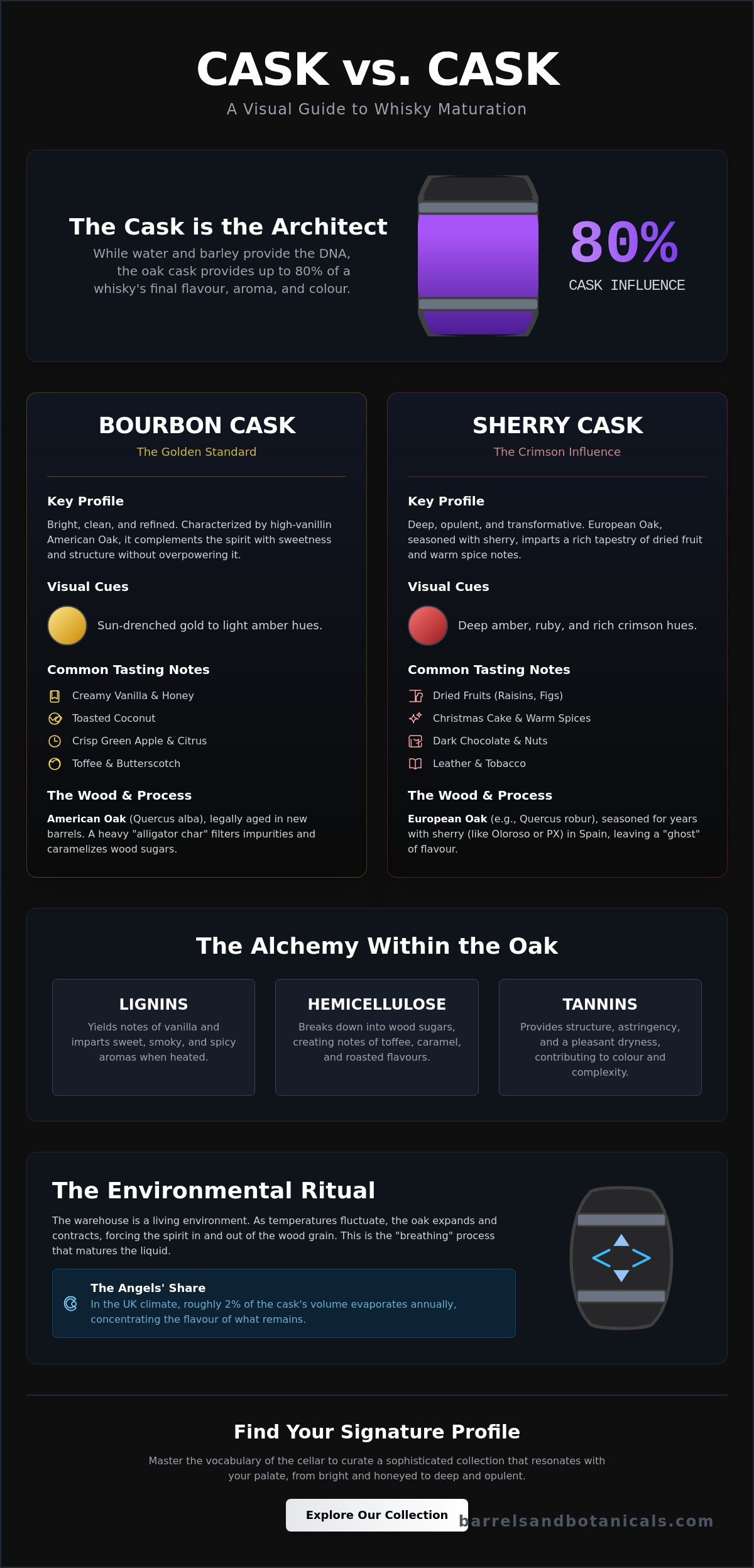
To understand the sherry cask vs bourbon cask taste, one must first acknowledge the vessel as the true creator. While water and barley provide the DNA, the oak provides the soul. Industry experts often cite that between 60% and 80% of a spirit's final flavour profile is derived directly from the wood. It is a slow, silent alchemy. A raw, fiery distillate enters the barrel; a nuanced masterpiece emerges years later. This transformation relies on the process of aging in wooden casks, where the liquid breathes through the grain, absorbing the history of the timber itself.
The legacy of the cask is inescapable. If a barrel previously held Oloroso sherry in Jerez or Bourbon in Kentucky, those ghosts remain. They haunt the new spirit with sugars, tannins, and esters. It isn't just storage. It is a ritual of oxidation, extraction, and evaporation. The liquid reaches into the pores of the wood, pulling out the essence of its predecessor. This interaction turns a simple grain spirit into a complex narrative of time and place. Deep. Vibrant. Evocative.
The Chemistry of the Cask
Inside the staves, complex compounds wait to be awakened. Lignins yield vanilla and spice. Tannins provide structure and a pleasant dryness. Hemicellulose, when broken down by heat, releases rich wood sugars. Distillers use precise toasting or charring techniques to caramelise these layers. Extractive maturation is the process of wood-to-liquid flavour transfer, a rhythmic exchange where the spirit pulls life from the oak. This chemistry defines the fundamental sherry cask vs bourbon cask taste differences we savour today. Bold botanicals. Deep oak. Zero compromise.
The Environmental Ritual
The warehouse is a living environment. As temperatures fluctuate, the oak expands and contracts. It breathes. This movement forces the liquid into the wood grain and back out again. During this cycle, the "Angels’ Share" occurs. In the UK climate, roughly 2% of the cask's volume evaporates annually, concentrating the essence of what remains. By 2026, the industry has shifted its gaze toward extreme wood provenance. Distillers now track specific forest coordinates and soil types, treating the cask with the same reverence as a vintage wine. It is a commitment to quality. Pure. Intentional. Refined.
The Golden Standard: Decoding the Bourbon Cask Palate
American Oak, scientifically known as Quercus alba, stands as the high-vanillin hero of the spirits world. It is a dense, resilient timber that offers a generous yield of sweetness and structure. Because US federal regulations mandate that bourbon must age in new, charred oak containers, these casks are remarkably abundant. Once they've served their initial purpose in Kentucky or Tennessee, they find a second life in distilleries across Scotland and the UK. This "first-fill" status is vital. It ensures the wood still possesses a wealth of active compounds ready to transform a maturing liquid.
The sensory signature here is one of brightness and deceptive complexity. When exploring the sherry cask vs bourbon cask taste, the bourbon influence is the one that champions clarity. It doesn't overshadow the original spirit. It refines it. This makes it the ideal choice for those seeking a vibrant, clean experience in their glass. Bold wood. Refined spirit. It's a partnership of balance that rewards the patient observer.
Signature Bourbon Cask Tasting Notes
The palate of a bourbon-matured spirit is a celebration of the orchard and the bakery. You'll encounter a primary profile of creamy vanilla, wildflower honey, and toasted coconut. These notes aren't heavy; they feel lifted and airy. The fruit profile tends toward the garden. Crisp green apples, ripe pears, and a touch of citrus zest provide a refreshing acidity. The finish is usually short to medium in length. It concludes with a crisp, sweet snap that cleanses the tongue, making it perfect for a mindful afternoon ritual where lightness is preferred over density.
The Impact of the Char
The interior of these casks undergoes a literal trial by fire. Coopers fire the wood until the surface cracks and blisters, a texture known as "alligator char." This layer of carbon acts as a sophisticated filter. It absorbs unwanted sulphurs and impurities from the spirit during maturation. Simultaneously, the heat triggers the Maillard reaction. This caramelises the natural wood sugars, creating the rich toffee and butterscotch notes that define the style. This process also dictates the visual allure. Without artificial additives, the spirit takes on a natural hue ranging from a pale, shimmering straw to a deep, burnished gold. It's the essence of the sun, captured in wood.
Grasping the specific nuance of the sherry cask vs bourbon cask taste allows a connoisseur to choose their experience based on the specific moment. The bourbon cask is the choice for energy, precision, and a sun-drenched flavour profile.
The Crimson Influence: Exploring the Opulence of Sherry Casks
The influence of sherry is a study in pure opulence. While American Oak offers a predictable sweetness, European Oak (Quercus robur) provides the architectural backbone of the sherry experience. It's a tighter grain. It brings more aggressive tannins. This wood delivers a structured, drying finish that demands the taster's full attention. By 2026, these casks have become the ultimate luxury marker in the spirits industry. A seasoned sherry butt now commands prices exceeding £1,000, while a standard ex-bourbon barrel often costs less than £150. This price gap reflects the scarcity and the profound impact the wood has on the final liquid.
The sherry cask vs bourbon cask taste profile represents a shift from vibrant sunshine to velvety moonlight. Sherry maturation creates a sensory signature that's dark, heavy, and undeniably festive. It's a profile designed for contemplation. Think of slow, evening rituals where the glass is warmed by the hand. The liquid doesn't just sit on the tongue; it coats it with a weight and viscosity that bourbon maturation rarely achieves. It's a deliberate choice for those who prefer their spirits to tell a story of time and timber.
The Oloroso vs. Pedro Ximénez Distinction
Most sherried spirits rely on two specific styles of wine for their seasoning. Oloroso casks are the traditional choice. They're nutty, dry, and spicy with distinct notes of roasted walnut and ground ginger. Pedro Ximénez, or PX, is the "dessert" cask. It's thick and syrupy, dripping with raisins, dates, and dark treacle. These sherry casks provide the "rancio" character found in aged spirits, offering a savory, earthy complexity that balances the intense fruit. This specific chemical evolution creates a depth that feels both ancient and curated, grounding the sweetness in a sophisticated, mushroom-like earthiness.
Signature Sherry Cask Tasting Notes
The palate of a sherry-matured spirit is a rich, layered tapestry. It's where bold botanicals meet the influence of ancient Spanish wood. You'll find a sensory journey through these primary markers:
- Dark Fruits: Sun-dried raisins, dense Christmas cake, and stewed plums.
- Savory Depth: Bitter dark chocolate, espresso beans, and polished old leather.
- The Spice Rack: Warm cinnamon, pungent clove, and a dusting of nutmeg.
- Visual Opulence: The natural colour is unmistakable, ranging from deep amber to intense mahogany or a vibrant "sherry red."
This is a world of texture and intent. The mouthfeel is often oily and viscous, leaving a lingering trail of spice and citrus peel on the finish. It's a sophisticated choice for those who value the ritual of the pour and the quiet complexity of a slow-sipping experience. Every drop is a testament to the patience required to extract these deep, crimson notes from the wood.
Sherry vs Bourbon: A Comparative Tasting Framework
To truly grasp the nuances of sherry cask vs bourbon cask taste, you must engage in a deliberate, side-by-side ritual. Pour two drams into clean Glencairn glasses. Let them breathe. This isn't just a drink; it's a sensory study in wood and time. The contrast between American and European oak provides a masterclass in how a vessel shapes the soul of a spirit. Observe the light. Swirl the glass. The ritual begins long before the first sip.
The Visual and Olfactory Guide
The first cue is the colour. Bourbon-matured spirits typically present as light gold or pale straw, reflecting the specific char of American white oak. On the nose, expect a floral bouquet. Vanilla, coconut, and honeyed citrus dominate the senses. The mouthfeel is creamy, often finishing with a clean, crisp snap. It's the liquid equivalent of a bright spring morning. Vibrant. Nuanced. Uplifting.
Sherry casks tell a darker, more brooding story. They impart deep amber, mahogany, or even polished copper tones to the liquid. The nose is heavy and decadent, rich with raisins, dates, and dark chocolate. You'll notice an oily, viscous texture that clings to the glass, a sign of the European oak's porous nature. For those who seek the pinnacle of this style, exploring vintage whisky is the best way to witness these traits in their most concentrated, unadulterated form. These rare bottles showcase the profound impact of decades-long wood contact.
The Cask-Finish Hybrid
The industry has seen a rise in "finishing," a technique where a spirit matures primarily in bourbon barrels before a secondary stay in sherry wood. This "sherry kiss" provides a delicate balance. It layers the bright, creamy bourbon notes with a top-coat of rich, dried fruit. Distinguishing a "sherry bomb" from a finished whisky requires patience. A sherry bomb is 100% sherry matured, offering an intense, spicy profile from start to finish. A hybrid is more subtle, revealing its secrets in stages.
The finish of the drink is the most revealing part of the ritual. While bourbon casks leave a lingering, marshmallow sweetness, sherry casks provide a dry, tannic grip that demands another sip. Your choice depends entirely on the mood. Bourbon profiles suit social, high-energy evenings. Sherry profiles belong to the quiet hours, paired with a leather chair and a slow fire. It's about intentional living. Every sip is a curated choice for quality. Bold flavours. Refined experiences.
Elevating the Ritual: Finding Your Signature Profile
Curating a personal collection requires a delicate balance between the bright, vanilla-led vibrance of American oak and the dark, fruit-laden intensity of European oak. In 2026, the discerning palate seeks more than just a brand name. You're looking for the soul of the spirit. Independent bottlers often provide this purity, offering single cask expressions that haven't been blended for consistency. This allows the specific sherry cask vs bourbon cask taste to shine without interference. Every bottle should tell a story of its time in the wood, undisturbed by industrial shortcuts.
Integrity is the hallmark of a premium pour. Modern enthusiasts demand non-chill filtered spirits and natural colour. Chill-filtration removes fatty acids and esters to prevent cloudiness, but it also strips away the mouthfeel and oily texture that define a high-quality dram. Natural colour ensures the mahogany hue of a sherry bomb or the pale straw of a bourbon cask is authentic, not a result of E150a caramel additives. At Barrels & Botanicals, we view these details as essential. It's about the gain of character, the preservation of the distiller's intent, and the celebration of raw, nuanced flavour.
Selecting Your Next Bottle
Reading a label is an art form that reveals the liquid's destiny. Look for "First-fill" to experience maximum wood influence, or "Refill" for a subtle profile where the distillery character leads. The vessel size matters too. A 500-litre Sherry Butt offers a slower maturation compared to a 250-litre Bourbon Hogshead. Navigating these technicalities is easier with a guide. Our whisky shop serves as a hub for both profiles, providing the expertise needed to decode the sherry cask vs bourbon cask taste before you commit to a purchase.
- First-fill: Intense, direct wood influence.
- Refill: Elegant, spirit-forward, nuanced.
- Hogshead: Standard size, balanced maturation.
- Butt: Large volume, ideal for long-term sherry ageing.
The Final Pour
The ritual of the pour is where the experience culminates. Create a mindful environment. Use a tulip-shaped glass to concentrate the aromatics. Add a single drop of water to open up the esters. This isn't just about drinking; it's about a sensory journey that rewards patience. You aren't losing the simplicity of a quick drink. You're gaining a complex tapestry of botanicals, grains, and wood. For those seeking the pinnacle of this craft, explore our collection of rare and old whisky for the ultimate cask experience. These bottles represent the height of intentional living and artisanal excellence.
Defining Your Personal Whisky Ritual
Choosing between the bright vanilla of American oak and the deep spice of European wood is more than a simple preference; it's an intentional exploration of liquid history. You've discovered how the sherry cask vs bourbon cask taste profile hinges on the chemistry of the timber and the previous occupant of the barrel. Bourbon casks bring that signature honeyed sweetness and toasted coconut, while sherry casks provide a rich, velvet finish of raisins and clove. Every dram tells a story of years spent in quiet maturation, developing a character that's entirely unique to its vessel.
At Barrels and Botanicals, we've been honing our family-run expertise since 2019 to bring you the finest expressions from across the Highlands and Islands. We specialize in sourcing rare and old Scottish whiskies that represent the pinnacle of craft distilling. Whether you're seeking a vibrant, citrus-forward bourbon maturation or a dark, decadent sherry bomb, our selection is curated for the discerning collector. We provide national UK delivery, ensuring your next discovery arrives safely at your door.
Explore our curated collection of Sherry and Bourbon matured whiskies.
The journey to finding your signature profile is a rewarding one. Pour a glass, take your time, and savor the nuanced layers of your next favorite pour.
Frequently Asked Questions
Is sherry cask whisky better than bourbon cask whisky?
Neither is objectively better; they simply offer different sensory landscapes for your palate. Sherry casks provide a dark, opulent profile full of raisins, cloves, and Christmas cake. Bourbon casks deliver a bright, floral elegance with plenty of honey and citrus. Your choice depends on the ritual you seek and the depth of flavour you desire for your specific mindful moment. It's a personal journey of taste.
Why is sherry cask whisky usually more expensive?
Scarcity and production methods drive the price difference. A high-quality European oak sherry butt can cost over £800 to produce, season, and transport from Spain. In contrast, an American bourbon barrel typically costs between £100 and £150. This 8x price difference reflects the limited availability of seasoned sherry wood compared to the mass-produced bourbon industry. You're paying for the rarity and the time-intensive seasoning process.
Can I tell the difference between casks just by looking at the colour?
Visual cues provide a helpful starting point for your sensory journey. Sherry maturation often results in deep mahogany, amber, or ruby hues within the glass. Bourbon maturation yields a lighter, straw-gold or pale lemon appearance. Always check the label for natural colour. Some mass-produced spirits use E150a caramel colouring to mimic the look of older, cask-heavy liquids, which can mask the spirit's true essence.
What does "double matured" or "cask finish" actually mean?
These terms describe a multi-stage journey for the spirit. Double maturation involves moving the liquid from its primary cask to a secondary vessel for a final period of refinement. This second stage usually lasts between 6 and 24 months. It adds a vibrant top note of fruit or spice to a base of mellow vanilla. It’s a curated layering of essence that creates a more complex, nuanced finish.
Do bourbon casks always make whisky taste like vanilla?
Vanilla is the defining hallmark of the sherry cask vs bourbon cask taste comparison. American white oak contains high levels of vanillin, a natural organic compound. This infuses the liquid with creamy notes of custard, coconut, and toasted marshmallow. While other factors like peat or fermentation play a role, the bourbon barrel remains the primary source of these sweet, comforting aromatics that many drinkers find so inviting.
Which cask type is better for a beginner whisky drinker?
Bourbon casks are often the most welcoming entry point for those new to the craft. Their profiles are typically lighter, sweeter, and less astringent on the palate. This allows the base botanicals and grain character to shine through without being overwhelmed by heavy oak tannins. It’s a clean, approachable start to your tasting journey before exploring the denser, darker, and more spice-forward sherry profiles later on.
How long does a whisky need to stay in a cask to take on its flavour?
In the UK, spirits must rest for a minimum of 3 years to legally be called whisky. However, the wood's influence truly deepens and matures after a decade. By the 10-year mark, roughly 60% to 70% of the final flavour profile is derived directly from the cask's seasoned staves. Time is the silent partner that allows the essence of the wood to fully integrate with the spirit.
Does the size of the cask (Butt vs Hogshead) affect the taste?
Size dictates the intensity of the wood's embrace on the liquid. A 200-litre American Standard Barrel has significantly more wood surface area per litre of liquid than a 500-litre Sherry Butt. Smaller casks, like the 50-litre Octave, accelerate the maturation process. This results in a more concentrated, woody finish and a faster exchange of oxygen through the oak pores. Smaller vessels often yield more vibrant, punchy flavours.


