

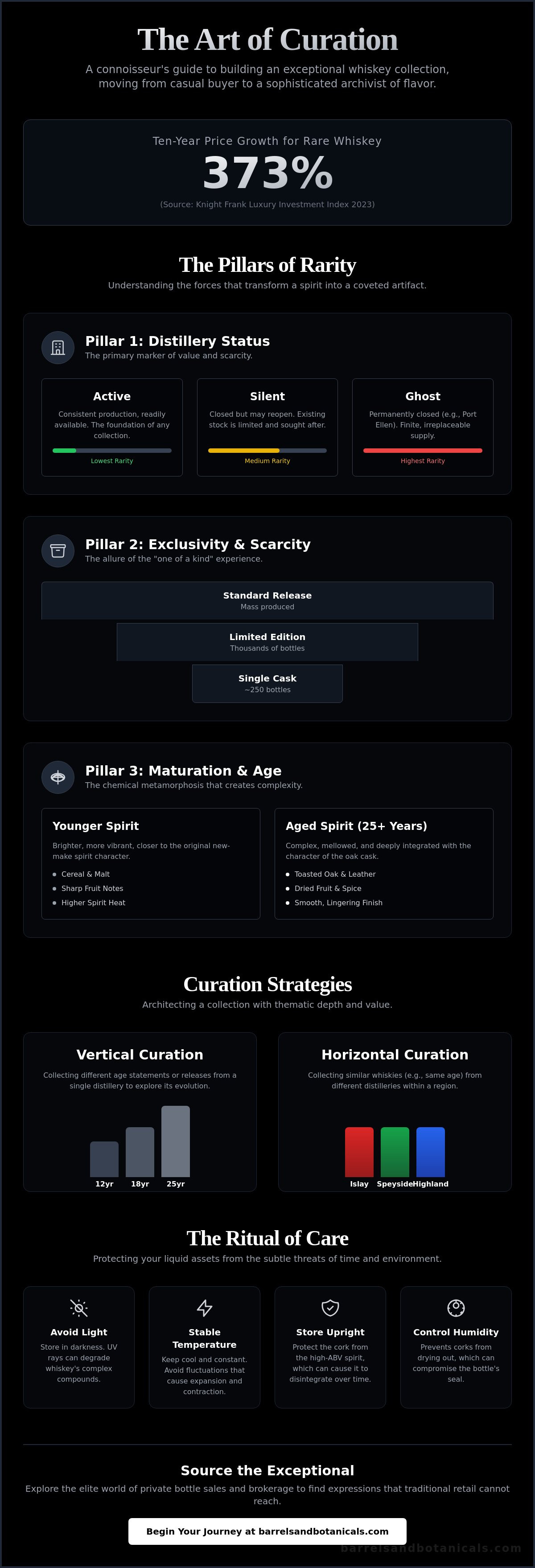
A truly exceptional whiskey collection is less a pantry of spirits and more a curated gallery of liquid history. Smoked peat. Toasted oak. The silent hum of a Highland warehouse. According to the Knight Frank Luxury Investment Index 2023, rare whiskey has seen a ten-year price growth of 373 percent, proving that these bottles are as much a financial asset as they are a sensory indulgence. You likely recognize that the true value of a dram lies in its story; the way a single sip transports you to a damp 19th-century dunnage warehouse. Yet, the path to a premium cellar is often cluttered with technicalities. Fear of counterfeit labels or the dense fog of jargon like non-chill filtered and cask strength can stall even the most passionate collector.
We're here to clear the air. You'll learn to master the delicate ritual of curation, moving from a casual buyer to a sophisticated archivist of flavor. We'll show you how to balance the bold ABV of a raw Islay with the elegant finish of a vintage Speyside while ensuring every bottle is preserved in peak condition. This guide explores the essential techniques for sourcing authentic editions, managing humidity-controlled storage, and speaking the nuanced language of Scotch history with absolute authority.
Key Takeaways
- Transition from consumption to curation by viewing each bottle as a chapter in a personal narrative of liquid history.
- Decode the pillars of rarity to distinguish between active, silent, and ghost distilleries when selecting your next acquisition.
- Learn to architect a whiskey collection using vertical or horizontal strategies that emphasize thematic depth and artisanal value.
- Master the delicate ritual of preservation to safeguard your corks and liquid from the subtle threats of light and temperature.
- Explore the elite world of private bottle sales and brokerage to source exceptional expressions that traditional retail cannot reach.
The Essence of a Whiskey Collection: More Than Just a Bar
To build a whiskey collection is to curate a personal museum of time and terroir. It transcends the act of mere acquisition. It's about a shift in consciousness where every bottle tells a story of a specific harvest, a master blender's vision, and a decade spent in quiet maturation. A true collection is a narrative of personal taste. It represents an evolution from passive consumption to intentional curation.
This shift defines the modern connoisseur. Intentionality is the hallmark of quality. Instead of cluttering a shelf with mass-produced labels, the collector seeks the rare, the artisanal, and the historically significant. The goal is to build a sensory archive that captures the essence of different eras and distilleries. It's a journey into the soul of the spirit.
As 2026 approaches, the movement toward mindful collection building has reached a peak. Industry reports suggest that 68% of premium spirit buyers now prioritize provenance and artisanal methods over brand recognition. This year represents a pivotal moment for those seeking to invest in liquid history. The focus has moved toward spirits that offer a genuine connection to the land and the craft.
The Philosophy of Curation
True curation focuses on the gain of complex flavor profiles rather than the loss of capital. Each bottle is an investment in sensory experience. A well-chosen whiskey collection acts as a library of moments. Peat-smoke. Sea salt. Caramelized oak. These aren't just flavors; they're memories of distant landscapes. The ritual of the home bar is elevated when every pour is a deliberate choice.
- Sensory Archive: Preserving the unique character of closed distilleries or limited releases.
- Social Elegance: The profound pleasure of opening a rare bottle to share with friends.
- Mindful Savoring: Shifting the focus to the nose, palate, and finish of a singular dram.
Sharing a rare bottle creates a unique social bond. It's an act of generosity that invites others into your curated world. The experience is about more than the liquid in the glass. It's about the conversation, the atmosphere, and the shared appreciation of craft.
Whiskey vs. Whisky: Navigating the Global Landscape
Understanding The Basics of Whiskey requires an appreciation for regional identity. The spelling often dictates the origin. "Whisky" typically denotes Scotch, Japanese, or Canadian origins. "Whiskey" with an 'e' points toward Irish or American traditions. Provenance is the heartbeat of any premium collection. It tethers the spirit to its geography and its history.
While the global landscape is vast, Single Malt Scotch remains the gold standard for many collectors. Its complexity is unmatched. The strict regulations governing its production ensure a level of quality that is both reliable and prestigious. Whether it's the medicinal brine of Islay or the floral elegance of the Speyside region, Single Malt provides the foundational structure for a sophisticated collection. It's the benchmark by which all other spirits are measured.
The Pillars of Rarity: What Defines a Collectible Bottle?
Building a whiskey collection is an exercise in capturing moments that can never be replicated. It is a pursuit of liquid history, where every bottle tells a story of geography, wood, and time. Rarity isn't merely about a high price tag; it's about the intersection of scarcity and character. To curate a selection with lasting value, you must understand the forces that transform a simple spirit into a coveted artifact.
The status of a distillery serves as the primary marker of value. Active distilleries offer consistency, while silent distilleries represent a finite resource. These "ghost" sites, such as Port Ellen or Brora which closed during the industry downturn of 1983, produce whiskies that are effectively extinct. Every bottle opened from these stocks reduces the global supply forever. This finite nature creates an inherent gravity for collectors. Limited releases and single cask bottlings further distill this exclusivity. A single cask might only produce 250 bottles, each possessing a unique fingerprint of flavor that a larger batch could never achieve. It's the allure of the "one of a kind" experience.
Maturation is a non-linear art form. An age statement tells you how long the spirit rested in oak, but it doesn't describe the intensity of that interaction. A 25-year-old spirit has undergone a chemical metamorphosis, shedding its youthful aggression for a complex tapestry of rancio, dried fruits, and deep spice. Provenance and packaging also play critical roles. A pristine seal, the original presentation box, and a documented history of temperature-controlled storage are essential. Without these, the liquid's integrity remains a question mark rather than a guarantee.
The Nuance of Vintage Whisky
A true vintage whisky is defined by the specific year of distillation rather than just the duration of its sleep. It captures the unique environmental conditions of that season, from the quality of the barley harvest to the specific humidity levels in the warehouse. As these spirits evolve over decades, the "nose" becomes more delicate and the "palate" gains a silky, resinous texture. The vibrant esters of a young spirit transform into nuanced, tertiary notes of leather, tobacco, and old library books. It is a sensory journey through time.
The Impact of ABV and Cask Strength
High-strength spirits are often the crown jewels of a serious whiskey collection. Spirits bottled at a higher alcohol by volume (ABV) typically retain more of the essential oils and fats that carry flavor. Non-chill filtering is a vital technique here; it ensures the spirit keeps its natural "essence" and botanical profile without being stripped for the sake of clarity. Cask strength is the purest, most undiluted expression of the barrel's influence on the spirit. These robust bottlings offer a more intense sensory impact and generally age more gracefully in the bottle over long periods. As you refine your collection, exploring refined botanical profiles can help you better appreciate the complex layers found in these high-proof masterpieces.
Curation Strategies: Building a Vertical or Regional Library
Building a whiskey collection requires more than a deep wallet. It demands a clear thesis. A vertical strategy focuses on the chronological evolution of a single house. You might track the influence of European oak across a 12, 18, and 30-year expression from a single Highland distillery. It is a study in patience. You see how the spirit matures and interacts with wood over decades. Conversely, the horizontal strategy captures a specific moment in time. By acquiring bottles distilled in 2005 from ten different producers, you witness how a specific harvest and climate influenced the entire industry. It is a snapshot of history.
A regional approach offers a sensory map of Scotland. An Islay-centric library celebrates phenolic intensity. It is medicinal, briny, and bold. A Speyside collection focuses on the orchard. It is honeyed, delicate, and floral. Most serious collectors aim for a 60/40 balance. Sixty percent of the bottles are destined for the glass, while forty percent remain sealed in the cellar. This ensures the ritual of tasting remains as vital as the act of preservation. Quality always trumps volume. One exceptional cask-strength bottle outweighs five standard releases.
Sourcing the Exceptional Online
The digital landscape of 2026 has transformed how we acquire liquid gold. When you buy rare scotch online UK, the screen must offer absolute transparency. Demand 8K macro photography of the fill level and the wax seal. High-end platforms now provide verified provenance through digital ledger certificates. This data proves the bottle lived in a temperature-controlled vault rather than a sunny kitchen shelf. Trust is the primary currency in the virtual marketplace.
Avoiding the Pitfalls of Mass Market
Supermarket "exclusives" often mask mass-produced spirit with clever branding. These bottles rarely appreciate because their production volume is too high. True rarity lives with independent bottlers like Cadenhead’s or Signatory. They release single casks at natural strength without chill-filtration. These expressions offer a raw, unadulterated essence of the distillery. They are the antithesis of the filtered, consistent profiles found on grocery aisles. A serious whiskey collection thrives on these unique, non-standard expressions that tell a story of a specific cask and a specific day.
The Ritual of Care: Protecting Your Liquid Assets
A premium whiskey collection is more than a gathering of glass; it's a living archive of craft and time. To preserve the integrity of these spirits, you must guard them against two primary predators: light and heat. Ultraviolet rays act as a catalyst for chemical degradation, stripping away the vibrant amber hues and muting the nuanced esters developed over decades in oak. A dedicated sanctuary is essential. Heat is equally destructive. High temperatures cause the liquid to expand, putting undue pressure on the seal and accelerating evaporation, often referred to as the "angel's share."
Unlike wine, which thrives on its side, your whiskey must always stand upright. The high alcohol content of distilled spirits, typically ranging from 40% to 65% ABV, is corrosive. Constant contact with the cork will eventually disintegrate the material, tainting the spirit with "cork taint" and ruining the seal. Maintaining a stable environment ensures your investment remains as pristine as the day it left the distillery.
- Verticality: Keep bottles upright to protect the cork from ethanol erosion.
- Light Control: Use blackout curtains or enclosed cabinets to block all direct sunlight.
- Stability: Avoid areas with heavy vibrations, such as near washing machines or high-traffic hallways.
Creating the Ideal Environment
The perfect cellar strikes a balance between aesthetic pride and scientific preservation. Professionals recommend a temperature "sweet spot" of 15 to 18 degrees Celsius. This range prevents the volatile compounds from reacting prematurely. If you choose to display your bottles, invest in UV-filtered glass cases. This technology blocks up to 99% of harmful rays while allowing the bottle's silhouette to shine. Humidity should be monitored with a digital hygrometer, aiming for 50% to 60%. This level is high enough to keep the top of the cork from shrinking but low enough to prevent mold from damaging the paper labels.
The Glassware Ritual
The act of opening a bottle from your whiskey collection should be a slow, sensory experience. The choice of glass is the final step in this preservation journey. A Glencairn glass, with its tapered neck, concentrates the "nose" of the spirit, allowing the complex botanicals and grains to reach the senses with precision. Alternatively, the traditional Copita glass offers a stemmed elegance that prevents your hand's warmth from altering the liquid's temperature.
The pour itself is a meditative moment. It's a celebration of the distiller's patience. For those who enjoy the architecture of a drink, exploring classic cocktails can provide a new perspective on how these aged spirits interact with other refined ingredients. Whether neat or mixed, the ritual remains sacred. Use modern inventory tools like Whiskybase to track your bottle valuations, which have seen a 564% increase in the rare market over the last decade. Document your tasting notes. Every sip is a entry in your personal history.
Ready to master the art of the pour? Explore our curated tools for the mindful host.
Sourcing the Exceptional: Your Journey with Barrels & Botanicals
Building a whiskey collection requires more than just a keen eye; it demands a trusted partner who understands the soul of the spirit. Barrels & Botanicals bridges the gap between traditional retail and the exclusive world of private brokerage. We offer a bespoke service that transcends the standard shelf. Our private bottle sale service creates a unique opportunity for you to refine or rotate your holdings with absolute confidence. It is a space where liquid history changes hands with the respect it deserves.
The Dalgarno family brings decades of heritage to every consultation. Their expertise in sourcing rare Scottish gins and legendary malt whiskies is unparalleled. They don't just find bottles; they uncover stories. Every item we list undergoes a rigorous authentication process. We examine the fill level, the integrity of the tax strip, and the specific typography of the label. This meticulous attention to detail ensures that every addition to your whiskey collection is genuine, vibrant, and investment-grade.
The Brokerage Advantage
Auctions are often defined by volatility. Prices can swing wildly based on the mood of a single afternoon, leaving both buyers and sellers at the mercy of the hammer. Our commission-based brokerage offers a more stable, sophisticated alternative. We provide a curated environment where value is determined by quality and rarity rather than frantic bidding wars. This model allows us to connect private sellers directly with a network of passionate collectors across the UK.
If you are looking to sell my whisky collection Scotland, our team provides the discretion and expertise required for high-value transactions. We handle the logistics, the verification, and the marketing. You receive a fair market return without the hidden fees or the uncertainty of the auction house. It's a partnership built on transparency and a shared love for the craft.
Inviting the Extraordinary
We celebrate the ritual of the pour. Our commitment to artisanal quality means we focus on small-batch spirits that offer a true sensory journey. Nuanced profiles. Vibrant botanicals. Distilled excellence. We believe that every bottle should be a celebration of intentional living. This focus on the "gain" of complex flavors makes us a premier destination for the discerning enthusiast who values clarity and depth.
Our inventory is a living archive of the industry's finest moments. From closed distilleries to experimental botanical blends, we prioritize the exceptional over the mass-produced. We invite you to explore our curated rare and old whisky selection to find the next masterpiece for your cellar. Let us help you curate a legacy that is as bold and enduring as the spirits themselves.
Elevating Your Private Liquid Library
Curating a profound whiskey collection is a patient pursuit of history and sensory excellence. It's about more than just filling a shelf; it's about recognizing the pillars of rarity and mastering the ritual of preservation to protect your liquid assets. Since 2019, our family-run team has helped collectors navigate the nuances of old and rare single malts. We understand that every bottle represents a specific moment in time. A liquid legacy captured in glass. Bold flavors. Rare textures. A quiet, sophisticated joy. The journey of a connoisseur is one of constant refinement and discovery.
Your path forward involves meticulous sourcing and expert curation strategies. We provide private bottle brokerage for discerning collectors seeking the world's most elusive spirits. Every selection is an invitation to experience the peak of artisanal craft and mindful appreciation. Explore our curated collection of rare and artisanal spirits and discover the next masterpiece for your shelves. It's time to secure your piece of history and savor the excellence you've worked to build.
Frequently Asked Questions
How many bottles do I need to officially have a whiskey collection?
You officially begin a collection with three distinct bottles. This trio represents the foundational ritual of curation: one for sharing with guests, one for personal discovery, and one for long-term preservation. A 2023 report from Rare Whisky 101 indicates that serious enthusiasts typically scale to 50 bottles before their portfolio is recognized as a significant private assembly.
Is whiskey a better investment than wine for a UK collector in 2026?
Whiskey has historically outperformed wine in the UK market, showing a 280 percent return over ten years according to the 2024 Knight Frank Luxury Investment Index. Fine wine returned 149 percent in the same period. By 2026, the scarcity of 1990s vintage malts will likely drive even higher premiums. Whiskey is more resilient; it doesn't spoil in the bottle like wine.
How can I tell if a bottle in my whiskey collection has gone bad?
Examine the fill level and the clarity of the liquid to detect spoilage. If the liquid appears cloudy or if the "angel's share" evaporation has dropped below the shoulder of the bottle, the seal is likely compromised. A well-maintained whiskey collection should offer a vibrant, complex nose. If you detect flat, metallic notes instead of rich botanicals, oxygen has muted the spirit's essence.
Does the value of a whiskey collection decrease if I open a bottle?
Opening a bottle effectively eliminates its secondary market value for investment purposes. Most global auction houses, including Sotheby's, only accept bottles with intact tax strips and original foil seals. While the financial worth of your whiskey collection might dip, the sensory gain is immense. You're trading a fiscal asset for a sophisticated, mindful experience that can't be measured in pounds.
What is the most expensive whiskey collection ever sold?
The Ultimate Whisky Collection holds the world record, fetching 7.6 million GBP at a Sotheby’s auction in 2019. This assembly featured 467 bottles and 9 casks, including the iconic Macallan 1926 60 Year Old. It remains the definitive example of liquid history. Such sales highlight the incredible value found in meticulous, artisanal sourcing over several decades.
Can I sell my whiskey collection through a private broker instead of an auction?
Private brokers offer a streamlined alternative to traditional auction houses for those seeking discretion and speed. Brokers like Mark Littler typically charge commissions between 10 and 20 percent. This is often lower than the 25 percent buyer's premium found at major houses. It's a professional route that prioritizes the privacy of the collector while ensuring the bottles reach a qualified epicurean.
How do I insure my rare whiskey collection against damage or theft?
Secure a specialist collectibles policy from providers like Hiscox or NFU Mutual to protect your assets. Standard home insurance policies often cap payouts for valuables at 2,000 GBP, which is insufficient for a premium portfolio. You'll need a digital inventory featuring high-resolution photos of every label. Update your valuations every 12 months to reflect the volatile nature of the secondary market.
What are the most sought-after Scotch brands for collectors right now?
Macallan and Springbank remain the primary targets for serious investors according to the 2023 Whiskystats Index. Collectors also focus on "ghost distilleries" such as Port Ellen and Brora, which ceased production in 1983. These bottles are finite treasures. They represent a vanished era of distilling that offers a nuanced, smoky profile that's increasingly rare in the modern landscape.


