

What if the true essence of elegance isn't found in a single valley, but in a shared philosophy that spans two continents? You might feel overwhelmed by the hundreds of distilleries lining the River Spey, or perhaps you're wary of purchasing a famous label that lacks genuine craft complexity. It's a common hesitation. Seeking the best speyside single malt whisky today requires looking beyond the prestige of the name to the intentionality of the liquid. Honeyed orchard fruits. Gentle heather smoke. The quiet hum of a copper pot still. These are the sensory hallmarks of a region currently undergoing a vital recalibration toward transparency and quality.
We understand that you value clarity and artisanal depth over mass-produced luxury. In this guide, you'll discover the defining characteristics of Speyside's finest malts and how their legacy of elegance has inspired the world's most sought-after Japanese expressions. We'll explore a curated selection of 2026 award winners, including the Glenlivet Founder's Reserve and the innovative GlenAllachie Masters of Wood series. You'll also gain a framework for evaluating sensory quality and understand the stylistic link to a Japanese whisky market now valued at 1.07 billion dollars. Prepare to slow down and savor a world of refined tastes.
Key Takeaways
- Identify the hallmark sensory profile of the best speyside single malt whisky, ranging from ethereal floral notes to robust, sherried depth.
- Learn why cask provenance and wood quality offer more genuine craft complexity than a simple age statement on the label.
- Explore the historical link between Scotland and Japan, tracing how traditional Speyside techniques evolved into modern Japanese masterpieces.
- Discover a curated selection of artisanal Japanese whiskies that serve as sophisticated alternatives for the discerning Speyside enthusiast.
- Master the ceremony of the pour by selecting the correct glassware and using the water of life to unlock hidden olfactory layers.
What Defines the Best Speyside Single Malt Whisky?
The essence of the region resides in its water. Soft. Crystal clear. Filtered through ancient granite and peat. It's the lifeblood of the River Spey. This gentle resource allows distillers to craft a spirit of unparalleled refinement, positioning Speyside single malts as the global benchmark for elegance. When you seek the best speyside single malt whisky, you aren't just looking for a drink; you're looking for a balance of nature and meticulous craft. It's an invitation to a world where flavor is treated with the same respect as a fine work of art.
The "Speyside Style" isn't a monolith. It's a vast spectrum of intentional experiences. At one end, you find light, ethereal spirits that dance on the tongue like a spring morning. At the other, robust, sherried "bombs" offer a rich, decadent embrace of dark chocolate and sun-dried raisins. This diversity is what makes the region so captivating to the modern epicurean. It ensures there's a profile for every palate, provided that palate values quality over mass production. The region's dominance isn't merely about the number of stills; it's about a commitment to a sophisticated, approachable profile that remains the standard for the global spirits market.
The Olfactory Journey: What to Expect on the Nose
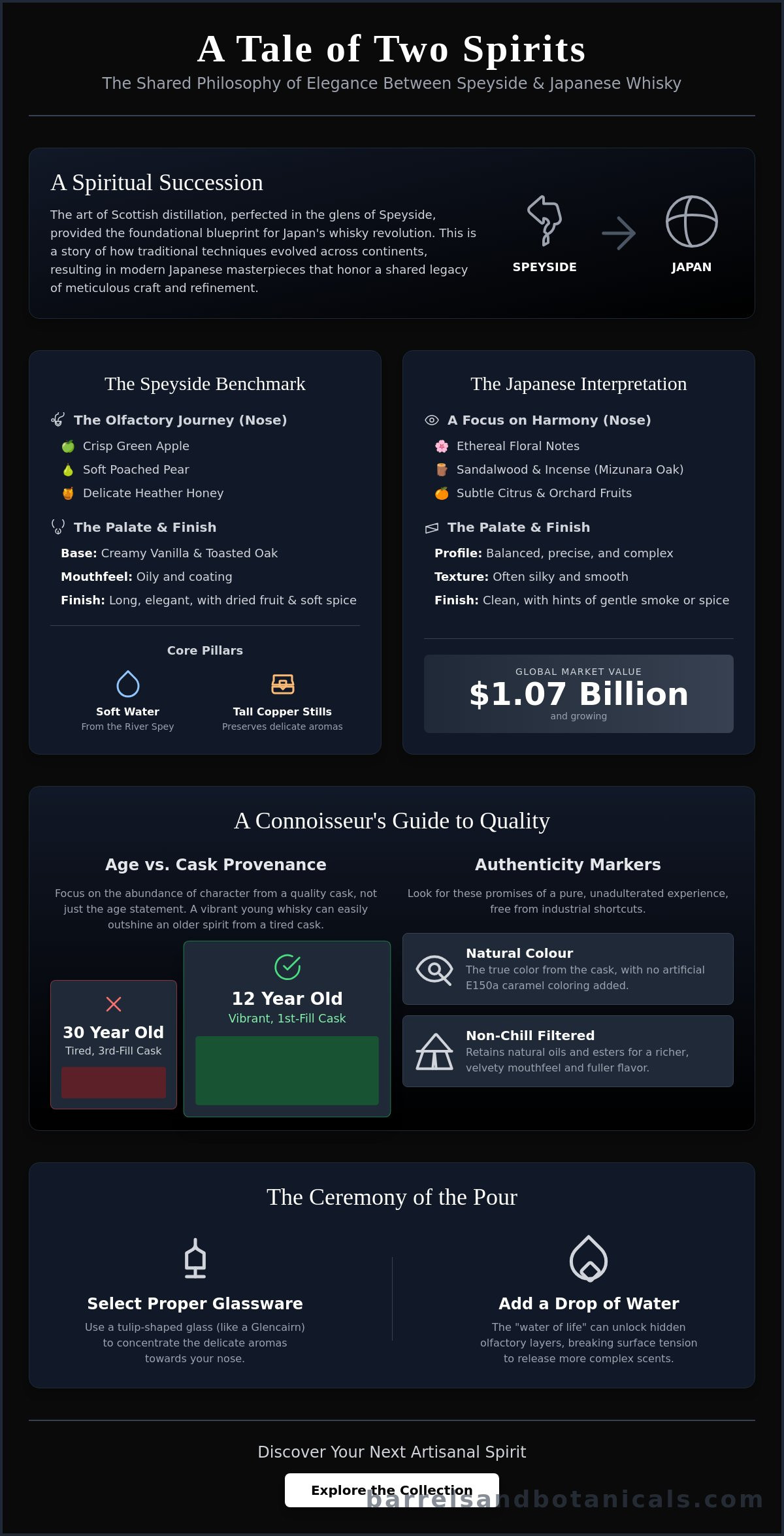
A true connoisseur begins the experience long before the first sip. The nose of a premium malt reveals a world of intentionality. You'll often identify the crisp bite of a green apple, the soft sweetness of a poached pear, and the delicate perfume of heather honey. These notes aren't accidental. They're the result of gentle distillation in tall, graceful copper stills designed to preserve the most volatile aromatic compounds. The Speyside nose is a botanical symphony of orchard and meadow.
The Palate and Finish: A Study in Sophistication
On the tongue, the experience evolves. It's a transition of textures and temperatures. You might notice a creamy vanilla base, a legacy of quality American oak, which slowly gives way to warming cinnamon and toasted oak. The mouthfeel of these copper-pot distilled spirits is often oily and coating, a sign of a slow, patient process. Ultimately, the primary marker of the best speyside single malt whisky is its finish. It's never abrupt. Instead, it's long, elegant, and lingering. It invites reflection. It's a celebration of abundance rather than a narrative of deficit. A well-crafted malt leaves a trail of dried fruit and soft spice that stays with you, encouraging you to slow down and savor the moment.
Evaluating Quality: How to Choose Your Next Premium Malt
Quality in the glass is an act of curation. The best speyside single malt whisky often reveals its true nature through the wood that cradles it. Many collectors fall into the trap of equating age with excellence. This is a narrative of deficit. Instead, focus on the abundance of character provided by active, high-quality casks. A vibrant 12 year old matured in first-fill bourbon barrels often outshines a 30 year old spirit lost in a tired third-fill cask. In 2026, the market is rewarding this transparency. Consumers are looking past the gold foil to the integrity of the liquid itself.
Seek out labels that celebrate authenticity. Look for Natural Colour and Non-Chill Filtered. These terms aren't just industry jargon; they're promises of a pure experience. Chill filtration removes natural oils and esters to prevent cloudiness when cold, but it also strips away the rich, velvety mouthfeel that defines a premium dram. Authentic craft avoids these shortcuts. When you choose a bottle that retains its natural oils, you're choosing the full, unadulterated story of the distillery.
The Architecture of Flavour: Cask Selection
Wood is the silent partner in distillation. American oak provides a creamy tapestry of vanilla, coconut, and toasted marshmallow. In contrast, European oak seasoned with Oloroso sherry provides a darker, more brooding profile of clove, nutmeg, and sun-drenched raisins. The modern trend toward finishing in Caribbean rum or Portuguese port pipes adds layers of complexity without masking the delicate distillery character. It's a delicate balance. Avoid over-oaked malts where the tannin dominates the fruit; the wood should frame the spirit, not smother it.
Buying for the Collection vs. Buying for the Glass
Choosing a bottle is an exercise in intentionality. If you're building a liquid library, prioritize rarity and distillery prestige. Official releases offer consistency, while independent bottlings provide a unique, unrepeatable snapshot of a single moment in time. When buying rare scotch online UK, the reputation of your specialist is your greatest asset. They act as the gatekeeper to the exceptional. For those looking to elevate their evening, focus on the sensory profile rather than the potential resale value. We invite you to browse our selection of premium single malts to find your next masterpiece.
The Speyside-Japanese Connection: A Spiritual Succession
The elegance of the Spey valley isn't confined by geography. It's a philosophy of precision. This journey of shared DNA began in 1924. Masataka Taketsuru, having meticulously studied the craft in the heart of Scotland, returned to Japan to establish the Yamazaki Distillery. He didn't just bring back technical drawings of copper stills; he brought back a reverence for the Speyside profile. This historical bridge transformed the global spirits landscape forever. Today, many connoisseurs find that the search for the best speyside single malt whisky naturally leads them to the artisanal distilleries of Japan.
The connection thrives on a shared obsession with "mizu" or purity. Just as the soft water of the River Spey defines the Scottish benchmark, Japanese distillers seek out pristine alpine sources to ensure a refined, approachable spirit. It's a pursuit of clarity. While Speyside offers a "botanical symphony," Japanese expressions often feel like that same music played with surgical precision. The introduction of Mizunara oak further elevates this profile. This rare Japanese wood adds a haunting layer of sandalwood and temple incense, a sophisticated departure from the vanilla and coconut of traditional American oak discussed earlier.
The Art of Blending: A Japanese Innovation
Japanese distilleries approach the single malt category with a unique, intentional focus. In Scotland, distilleries often trade casks to create complexity. In Japan, a single distillery might produce dozens of distinct spirit styles using different yeast strains, still shapes, and peat levels. This allows them to blend "in-house" to create a single malt that rivals the layered depth of Scotland's finest. It's an artisanal feat. The result is a liquid that emphasizes intentional experiences. You'll find the familiar floral notes of a Speyside malt, but they're often punctuated by a distinct, spicy aromatics that feel entirely modern.
Why the Discerning Palate Moves Between Both Worlds
The modern epicurean understands that quality isn't a competition, but a curated preference. Because aged Japanese stocks are increasingly scarce, they've become a rare, sought-after alternative to traditional Speyside classics. Moving between these two worlds allows you to appreciate the subtle shifts in craft. A Japanese malt offers a social elegance that's hard to replicate. Whether enjoyed neat or as part of a classic cocktail ritual, these whiskies demand you slow down. They bridge the gap between traditional hospitality and a modern, health-conscious appreciation for the finest natural ingredients. It's a world of abundance, waiting to be explored.
Standout Selections: Japanese Whiskies for the Speyside Enthusiast
The global Japanese whisky market, valued at USD 1.07 billion in 2026, offers more than just a geographic alternative. It provides a stylistic evolution. For those who have already explored the best speyside single malt whisky, these expressions offer a familiar elegance viewed through a different lens. This is a curated preference for quality. Each bottle represents a meticulous pursuit of balance. It's a world where the hero of the narrative is the liquid itself, refined through decades of intentional craft.
The modern connoisseur understands that variety is the hallmark of a sophisticated collection. While the Scottish heartland remains a vital benchmark, the artisanal distilleries of Japan have mastered the art of the delicate, fruity profile. These spirits aren't mass-produced alternatives; they're premium creations that demand a slow, patient appreciation. They invite you to experience a different kind of abundance.
The Elegant All-Rounders: Perfect for Speyside Lovers
For a palate accustomed to the honeyed sweetness of the Spey valley, certain Japanese malts provide a seamless transition. Look for expressions that emphasize orchard fruit and soft heather notes. These spirits often spend time in Mizunara oak, which imparts a distinct spicy, incense-like finish. It's a layer of sandalwood that adds depth without overwhelming the delicate base. For the entry-level connoisseur, these bottles typically range from £80 to £150. They're perfect for those seeking to expand their sensory horizons while maintaining a standard of premium excellence.
The Rare and Remarkable: For the Serious Collector
Beyond the core range lies a world of limited editions and older age statements. These bottles are defined by their rarity and the precision of their sourcing. In a period of market recalibration, these selections stand out for their transparency and proven provenance. Acquiring such masterpieces requires the guidance of a premium whisky boutique. Here, the choice is framed not as a sacrifice but as an investment in a unique sensory experience. Explore our artisanal Japanese collection to find a spirit that matches your discerning standards.
The Ceremony of the Pour: Mastering the Sensory Experience
The final stage of the journey is the most intimate. It's the moment the liquid leaves the bottle and enters your world. To truly appreciate the best speyside single malt whisky, one must embrace the ceremony of the pour. This isn't just about consumption. It's about intentionality. The environment should be calm. The lighting, soft. Every detail, from the weight of the glass to the temperature of the room, serves to elevate the spirit's complex narrative. It's an invitation to slow down.
Glassware is your primary tool for discovery. A Glencairn or a tapered tulip glass is essential. These shapes are engineered to concentrate the volatile aromatics, channeling the botanical symphony we explored earlier directly to the nose. Before sipping, consider the "water of life." Adding a single drop of room-temperature water can be transformative. It breaks the surface tension. It releases hidden esters. Suddenly, a tightly coiled malt opens into a bouquet of meadowsweet and citrus. Patience is the connoisseur's greatest virtue.
The Visual and Tactile Ritual
Observe the spirit before it touches your lips. Tilt the glass. Watch the "legs" as they crawl down the crystal. This reveals the viscosity and the richness of the cask history. A deep amber suggests years of interaction with European oak, while a pale straw might hint at a lively first-fill bourbon influence. The golden hue of a well-aged malt as it catches the evening light is a sight to behold. It's a testament to time and the quiet work of the warehouse. Artisanal accessories, like heavy decanters and hand-blown carafes, add a tactile layer to the experience, making the act of serving as pleasurable as the drink itself.
Pairing with Intent: Beyond the Glass
To reach the pinnacle of the sensory experience, one must look beyond the glass. A Speyside or Japanese malt finds its most sophisticated partner in a premium cigar. The creamy, honeyed texture of the whisky provides a stunning counterpoint to the earthy, robust notes of quality tobacco. It's a balance of power and grace. This ritual is a celebration of quality over quantity. It's a way to value wellness through the lens of sophisticated hospitality. By choosing the exceptional and savoring it slowly, you transform a simple evening into a memorable, intentional experience. The legacy of Speyside isn't just in the bottle; it's in the moment you create around it.
- New World Cigars: Often provide a spicy, cedar-forward profile that complements the warming cinnamon of a sherried malt.
- Cuban Cigars: Known for their leather and cocoa-like sweetness, they pair beautifully with the orchard fruit notes of a lighter Speyside.
Begin Your Journey into Refined Elegance
The path to discovering the best speyside single malt whisky is paved with intentionality and a deep respect for the craft. We've explored the spectrum of flavor from ethereal florals to robust sherried depths, alongside the spiritual succession that links Scotland to the artisanal mastery of Japan. You've learned that true quality resides in the integrity of the cask and the patience of the ritual rather than a mere number on a label. It's a shift from a narrative of deficit to one of abundance and refined taste.
As a family-run independent specialist, we offer more than just a selection of bottles. We bring rare and old whisky brokerage expertise to every interaction, alongside a curated selection of premium cigars and spirits designed for the discerning epicurean. Our philosophy values the ceremony of the experience, ensuring that every pour is a moment of refined pleasure and social elegance. Explore our curated collection of artisanal Japanese whiskies to discover how these modern classics can elevate your home ritual. Slow down and savor the abundance of a well-made life.
Frequently Asked Questions
What makes Speyside whisky different from Highland or Islay malts?
Speyside malts are defined by their elegance, orchard fruit notes, and honeyed sweetness, whereas Islay whiskies are famous for their intense peat smoke and medicinal character. While Highland malts offer a rugged diversity of profile, the best speyside single malt whisky focuses on a refined, approachable sophistication. This distinction comes from the gentle distillation in tall stills and the soft water of the River Spey. It's a world of grace rather than grit.
Is Japanese whisky really made the same way as Scotch?
Japanese distilleries utilize production methods that are deeply rooted in Scottish tradition, particularly those of the Speyside region. From the shape of the copper pot stills to the use of malted barley, the technical foundation is nearly identical. However, Japan introduces its own artistry through unique yeast strains and the use of Mizunara oak. This creates a profile that many describe as Speyside perfected through surgical precision and an obsession with purity.
Why are some Speyside whiskies so much more expensive than others?
Price is often a reflection of rarity, distillery prestige, and the quality of the wood used for maturation. A malt aged in a first-fill Oloroso sherry butt incurs higher costs than one in a seasoned bourbon barrel. Limited releases and older age statements also drive value in the secondary market. In 2026, the market rewards transparency and artisanal depth over mass-produced labels. It's a curated preference for quality over quantity.
Should I add water or ice to a premium single malt?
Adding a single drop of room-temperature water is the preferred method for opening the bouquet of a premium malt. This ritual breaks the surface tension and releases hidden esters. Avoid ice, as the extreme cold numbs the tongue and suppresses the delicate orchard fruit and floral notes that define the best speyside single malt whisky. Intentionality in consumption ensures you experience the full abundance of the spirit's complex layers.
Which Japanese whisky is most similar to a Macallan or Glenfiddich?
For those who enjoy the sherried richness of a Macallan, the Yamazaki 12-Year-Old offers a stunning Japanese alternative with its deep fruit and spice. If you prefer the lighter, floral elegance of a Glenfiddich, the Hibiki Japanese Harmony provides a similarly approachable and honeyed profile. Both distilleries focus on the same pursuit of purity that defines the Spey valley's most famous exports. They're modern masterpieces that respect their Scottish ancestors.
Can I sell a bottle from my collection through your brokerage service?
We do offer rare and old whisky brokerage expertise for collectors looking to divest or curate their holdings. As a family-run independent specialist, we provide a knowledgeable and discreet service for those with high-end, authentic bottles. You'll need to contact our team directly to discuss the provenance and value of your specific collection. We value the story behind every bottle we represent and treat each transaction with professional passion.
What is the best way to store an opened bottle of rare whisky?
Store your opened bottles upright in a cool, dark environment away from direct sunlight to prevent the cork from degrading. Unlike wine, whisky doesn't mature in the bottle, but excessive air can lead to a loss of volatile aromatics over time. It's wise to decant the remaining liquid into a smaller vessel if the bottle is more than half empty. This simple act of preservation ensures the sensory integrity remains intact for your next pour.
How do I know if a rare whisky is authentic when buying online?
Authenticity is guaranteed by the reputation and expertise of the specialist you choose. Look for clear provenance, high-resolution imagery of the seals, and a transparent history of the bottle. A trusted boutique will have the technical knowledge to verify tax strips and glass codes. It's a matter of choosing a partner who treats the spirit with the same respect as the master distiller. Verification is the cornerstone of a premium experience.


